
Saturday 20th & Sunday 21st December 2025
Fascinated by history, when arranging this holiday, this visit was high on my bucket list but to be here we had to stay at one of the lodges in the middle of nowhere, and The Fugitive Drift was chosen by our tour organiser. As mentioned this is a very friendly establishment and staff catering for your every need and conduct the tours.

Last night we were given our instructions for our first morning, breakfast at 0650hrs and the guide tour leaves “promptly” at 0730hrs, naturally we “conformed”!!!! Breakfast was served on the deck amongst the trees and was freshly cooked and as everywhere else there was plenty of fresh fruit to be had.
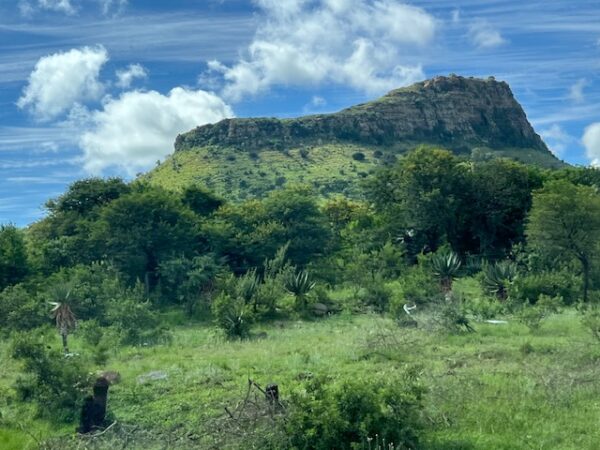
As instructed, we were “on parade” at the appointed time, met our guide “Peewee” (not sure if this is the correct spelling!), and off we went. The drive to our destination the “Isandlwana” battlefield took the best part of 3/4 of an hour due to us having to drive most of the distance at about 5-kph due to the roads already mentioned, though some of today’s were even worse!!! What I find strange, here is an area where tourists frequent but the roads are really, really bad. Forget about the potholes, sort the ditches out!!! En-route we heard a CD with the narrator describing the politics of that era, the Zulus expansion that got them to Zululand and the attitude of the British and the Boer connections. The unfortunate thing, listening was difficult as the vehicle we were in was fighting the bump and and other obstacles causing it to to protest very loudly, however I found this link which helped fill the missing gaps (https://en.wikipedia.org/wiki/Anglo-Zulu_War), naturally it was about expansion, but in this case, both sides had aspirations and after an ultimatum given by the British, part of which was the Zulus had to “diss-arm”, which they didn’t, the Anglo-Zulu war broke out on the 11th January 1879.
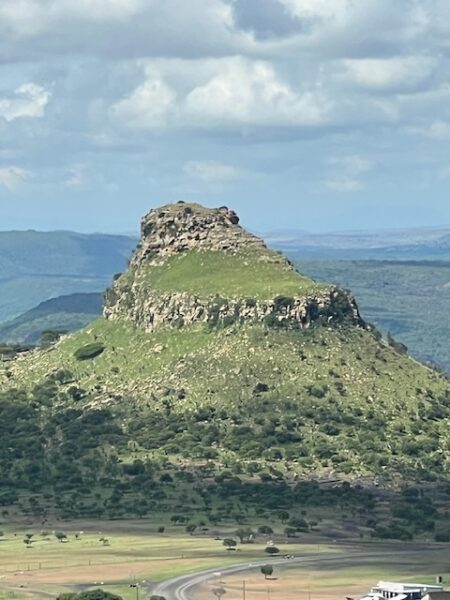
Lord Chelmsford (https://en.wikipedia.org/wiki/Frederic_Thesiger,_2nd_Baron_Chelmsford) led columns of British Red Coats, a contingent from Natal and others totalling 16,500 across the Buffalo river at Rorke’s Drift into Zululand, and set up camp under the mountain known as “Isandlwana”. The actual position was good, they were on the top of a gentle rolling hill with both flanks semi protected by mountains. However, Chelmsford receives information as to where the main body of the Zulu army was and sets off leaving 1800 soldiers to guard the camp. What nobody appreciated was the speed and agility theses Zulus move at and by the time Chelmsford arrives they had gone and yes, they attacked the 1800 men left at Isandlwana, the rest is history; the worst defeat in the history of the British Army, one survivor!!
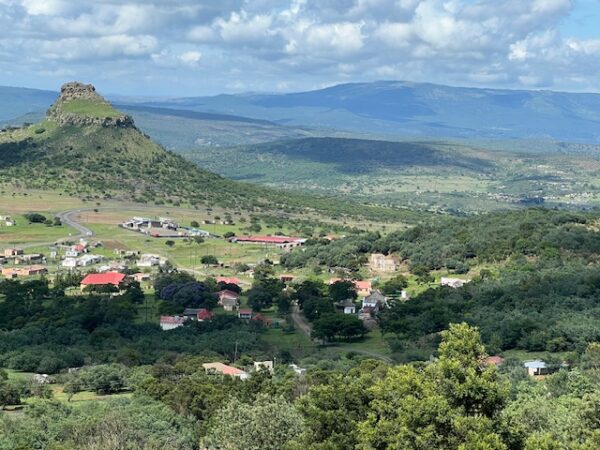
History has painted Chelmsford as the scapegoat, but having spent the time here I think that was mistaken. Chelmsford carried out all the right protocols but the person left in command of the Isandlwana, a Colonel Pulleine, with Colonel Durnford deployed his troops in a thin red line 300 yards ahead of the ammunition wagon and spread out thinly. Firstly he had no lookouts to warn him and had no idea of the Zulu strength, basic requirements of a commending officer. Apparently there were 500,000 cartridges in the wagons, and a box full of cartridges weighted 100lbs, imagine trying to replenish the red coats some 300 yards away facing up to 20,000-Zulu warriors charging at full pelt towards you. Those brave soldiers had no chance so stood their ground and the inevitable happened at the battle of Isandlwana (https://en.wikipedia.org/wiki/Battle_of_Isandlwana). One issue for the column was their colours, and one of the remaining officers instructed a soldier to save the colours of the 24th regiment and head off. Unfortunately he didn’t make it, he was caught crossing the river and as he fell into the river, apparently running very fast, took the colours away. Some weeks later someone found them and they can now be seen in Brecon Cathedral; the 24th is a Welsh regiment and many of their soldiers came from around that area.
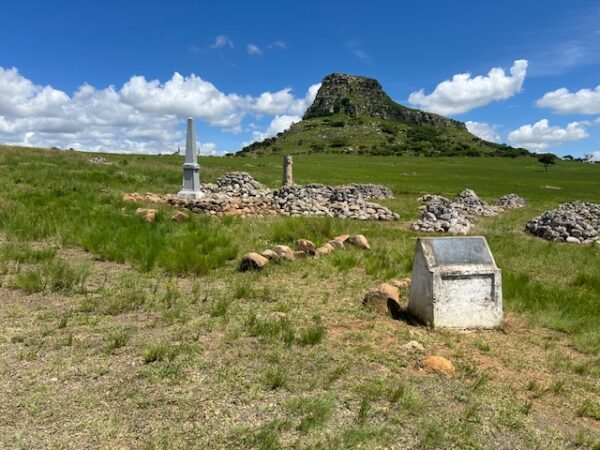

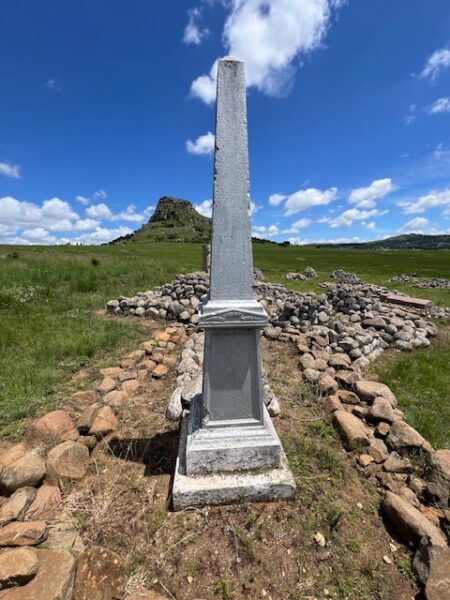
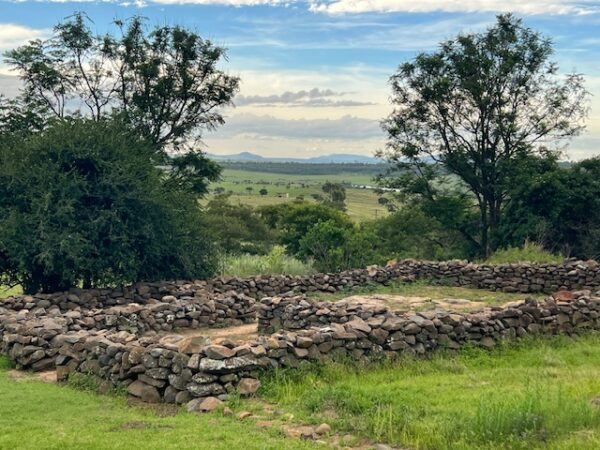
The only reminder of the battle that took place here is a monument, and lots of piles of white stones. It was about four months before the re-maned 24th regiment could return to clear up all that was left of the 1800 corpses, that being bones in what uniforms were still left. The white piles of stones stand as monuments to the men buried beneath them.
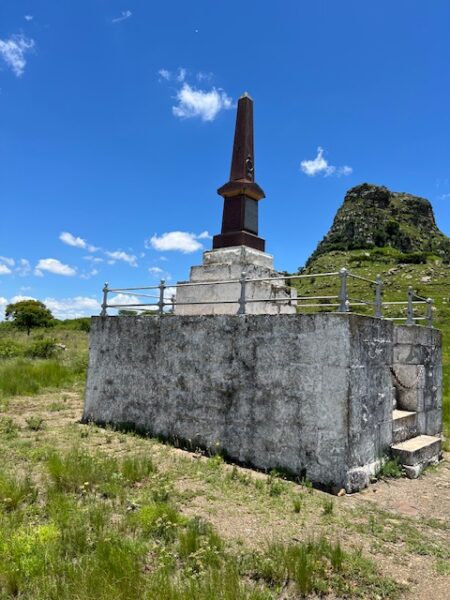
Our guide took us up one of the mountains where we could get an appreciation of the battlefield’s topography and he explained everything in detail. To add to “his” authenticity as a guide of this battlefield, his great, great, great grandfather and his great, great ,great uncle were part of the Zulu army at that time so no doubt the stories were handed down to each generation.
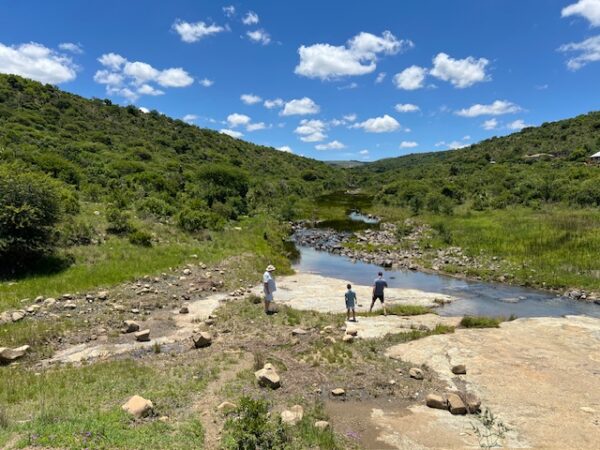
Whilst all this was happening, Chelmsford recognised he’d been “hoodwinked” by the Zulu army but had no idea what was going on so didn’t rush back; at this point he was about 12-miles away with a range of mountains between him and the battlefield.
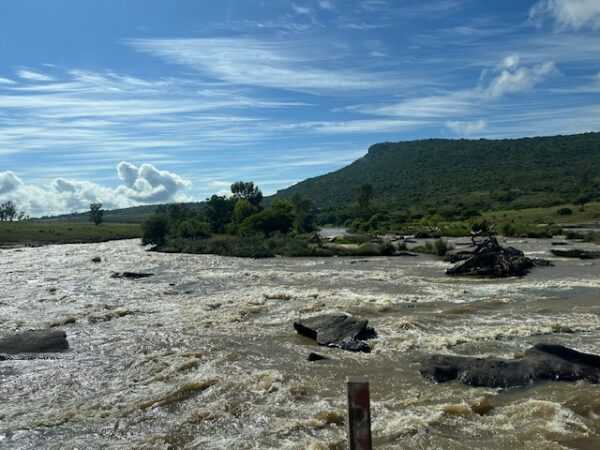
Once the Zulu had despatched the 1800-force of the British Army, they headed to the Buffalo river crossing at “Rorke’s Drift” to cut off Chelmsford column, but a small contingent of around 4,000 disobeyed their King’s orders “not” to cross into Natal; the river was the border. The issue was this regiment consisted of young Zulu warriors and before they could get married they had to wash their “Ikiwa”, (their stabbing spear) in blood on the battlefield and this particular regiment hadn’t had that chance at Isandlwana, as they were one of the “Buffalo” formation “attack” horns used to outflank their enemy. Fortunately for the contingent at Rorke’s Drift, the one surveyor from Isandlwana told them what happened as headed back to safety; couldn’t blame him, but not very loyal!!!
The garrison of just over 150 men, which includes the sick had a hour or so to sort their defence out, so improvised barriers made from readily available supplies at the mission station to defend against the approaching Zulu force of around 4,000. The primary materials used were mealies (bags of grain) and biscuit boxes used to join the two main buildings with a four ft “wall”. The onslaught started late afternoon and went deep into the night; unbelievable courage against wave after wave of Zulu warriors. By early morning the Zulus stopped and either acknowledged they were beaten or more probably they caught sight of Chelmsford approaching with his column back to Rork’s drift. According to several eye witnesses at the time, the reminder of the Zulus heading back into Zululand passed Chelmsford coloumn so close they could touch but both armies had had enough. The battle of Rork’s Drift (https://en.wikipedia.org/wiki/Battle_of_Rorke%27s_Drift) should have had a different result but life is so precious they gave their all as surrendering to the Zulu’ meant immediately being executed.
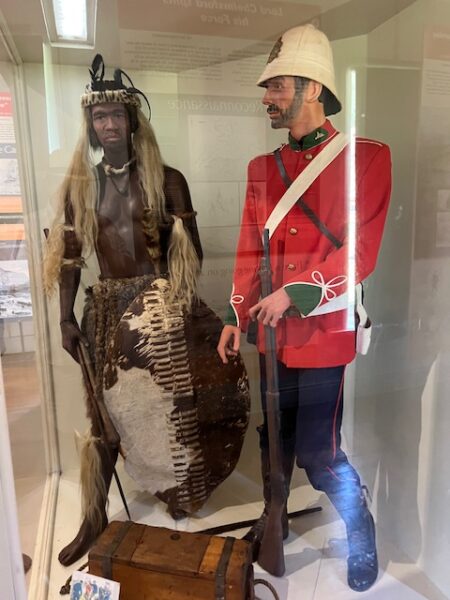
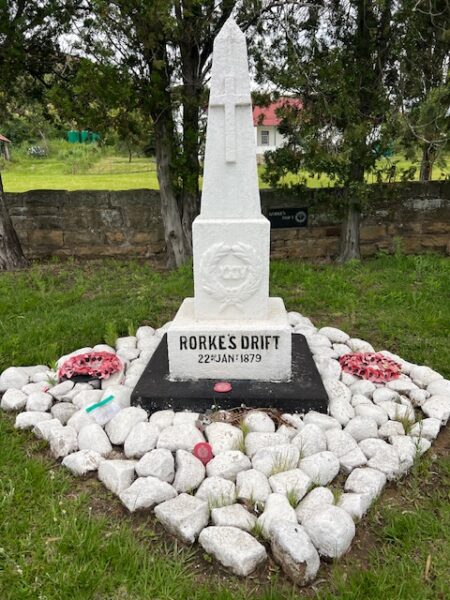
The small museum was fascinating and had a number of artefacts from that fateful day in January 1879 and a cemetery with the remains of the solders and their names on a memorial.
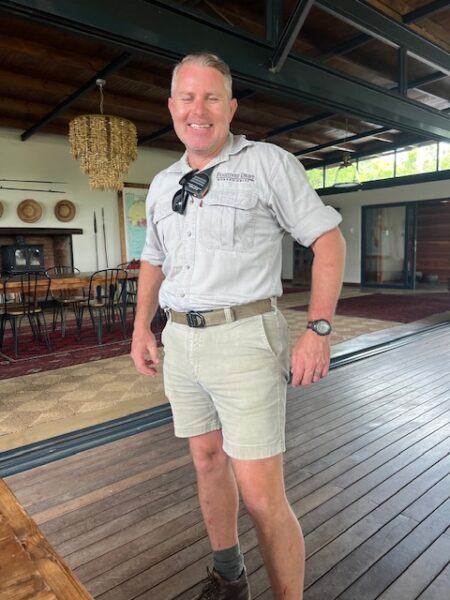
Christine joined me for the tour of the Isandlwana battlefield but had had enough so didn’t join me on the Rork’s Drift tour, a pity as our guide, a South African that had spent 12-years in the British army and done several tours to conflict zones including Afghanistan, Iraq and Northern Ireland and could empathise with what these soldiers were going through. This feeling came out in his dialogue and Brad and I both felt quite emotional at these events; the level of detail he went to was quite extraordinary; best historical tour so far.
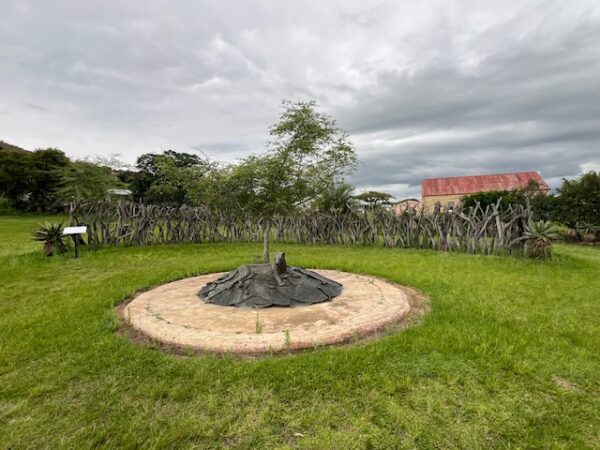
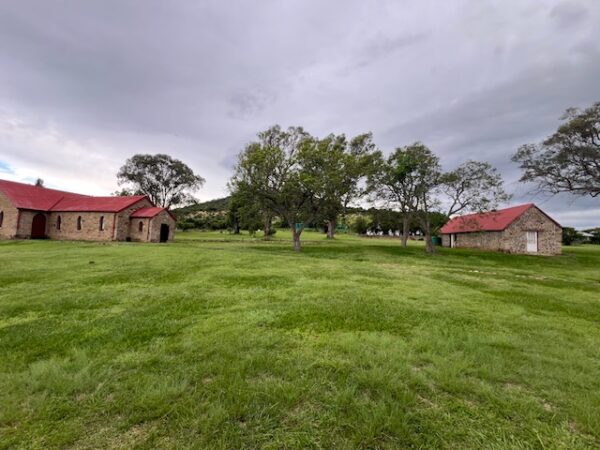
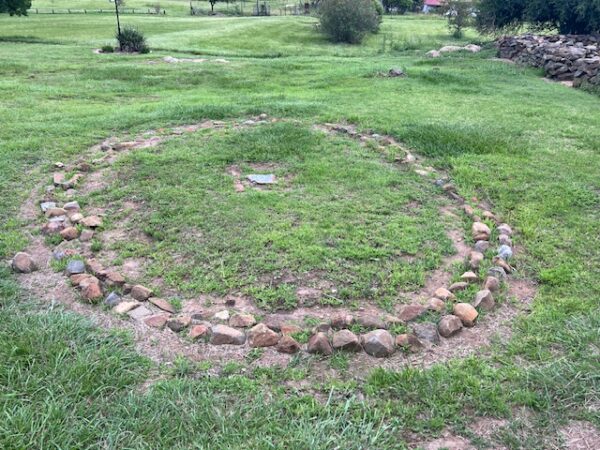
Whilst I was enjoying myself, Christine lounged about the pool and did some laundry; as she said, “a woman’s work is never done”!!!!!
All my pre-conceived ideas about the Anglo-Zulu wars have been completely shaken up and I’m glad I now have the correct information; I just hope I don’t forget it all!!!
I was very satisfied and glad we made the detour though poor Christine had to suffer it; still I visited the Botanical Gardens with her in Cape Town!!!
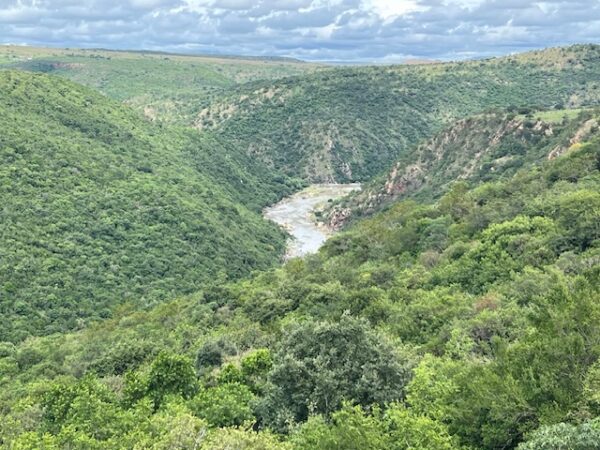
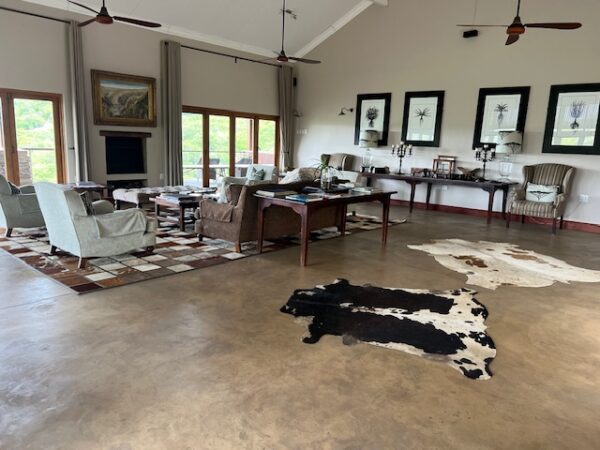
From the excellent library terrace here at Fugitive Drift you can see down to the Buffalo river and just make out the drift. I was flummoxed about the word “drift” but soon realised it was South African for “ford”, a shallow crossing of a river. The walkways around the property are long decks, but the handrails are not safe to hold onto; “health and safety, what health and safety”?? At the back of the pool there is a pretty “sheer drop” to the river, no railings!!!! What the hell, quite happy to get back to how things used to be in UK.
The food here is nice, and certainly more conventional than the food we had in Shamwari but naturally the ambience is not in their league, but we enjoyed. our time here. During the afternoon of Sunday we even had a monkey turn up on our verandah, but as we moved he shot off.
Our next stop in Johannesburg, a six hour drive, just hope it’s not on all unmade roads.